{{ 'fb_in_app_browser_popup.desc' | translate }} {{ 'fb_in_app_browser_popup.copy_link' | translate }}

{{ 'in_app_browser_popup.desc' | translate }}

🚚Free delivery upon 6 bottles|Terroir Collection - 3 bottles free delivery

🍷酒款、優惠經常更新,請時刻追蹤我地😊|🤵👰Wine Couple 你的最佳婚宴酒酒商

montecarlo-doc

Montecarlo DOC

No product in this category

Montecarlo DOC

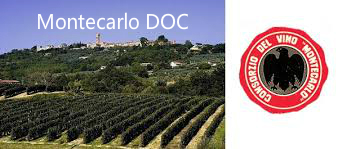
Montecarlo was one of the earliest DOCs, created in 1969, of central Italy's Tuscany region; it  covers the commune of Montecarlo as well as neighboring Altopascio, Capannori and Porcari. The DOC covers an eclectic selection of wines from a mix of Italian and international varieties.

The Bianco and Rosso are subject to rather complex rules regarding grape varieties. Montecarlo Bianco must be made from 30-60 percent Trebbiano Toscano, plus 40-70 percent of one or more of Pinot Bianco, Pinot Grigio, Roussanne, Sauvignon Blanc, Sémillon and/or Vermentino. Other varieties may make up 20 percent.

The Rosso counterpart must feature 50-75 percent Sangiovese, 15-40 percent of Canaiolo Nero, Merlot and/or Syrah, 10-30 percent of one or more of Cabernets Franc and Sauvignon, Ciliegiolo, Colorino and or Malvasia Nera. Again, other grapes may make up to 20 percent.

Varietal wines can be made from Sauvignon Blanc, Vermentino, Cabernet Sauvignon, Merlot and Syrah. Is is usual in the EU, the stated grape must make up at least 85 percent of the blend. 

Vin Santo may be made in standard (white) and Occhio di Pernice versions. These employ the grape variety rules used for the Bianco and Rosso, respectively. For more information on the style and production of vin santo wines, see vin santo.

The Montecarlo in question is a small town in northern Tuscany, not the famous Monte Carlo administrative area of Monaco, 260 kilometers (160 miles) due west across the Ligurian Sea. While both names mean "the hill of Carlo/Charles", they are quite distinct. Montecarlo was named after Holy Roman Emperor Charles IV in the 14th Century, while Monte Carlo was named after Charles III of Monaco in the 19th Century.