Region : Tumbarumba,South Australia
Grapes :100% Chardonnay
Alcohol : 13%
Website : https://www.penfolds.com/en-au/home
🌟 Australia's Most Iconic Wine Brands
🏅 James Suckling 95 pts
🏅 Wine Advocate 92 pts
🏅 Vinous 92 pts

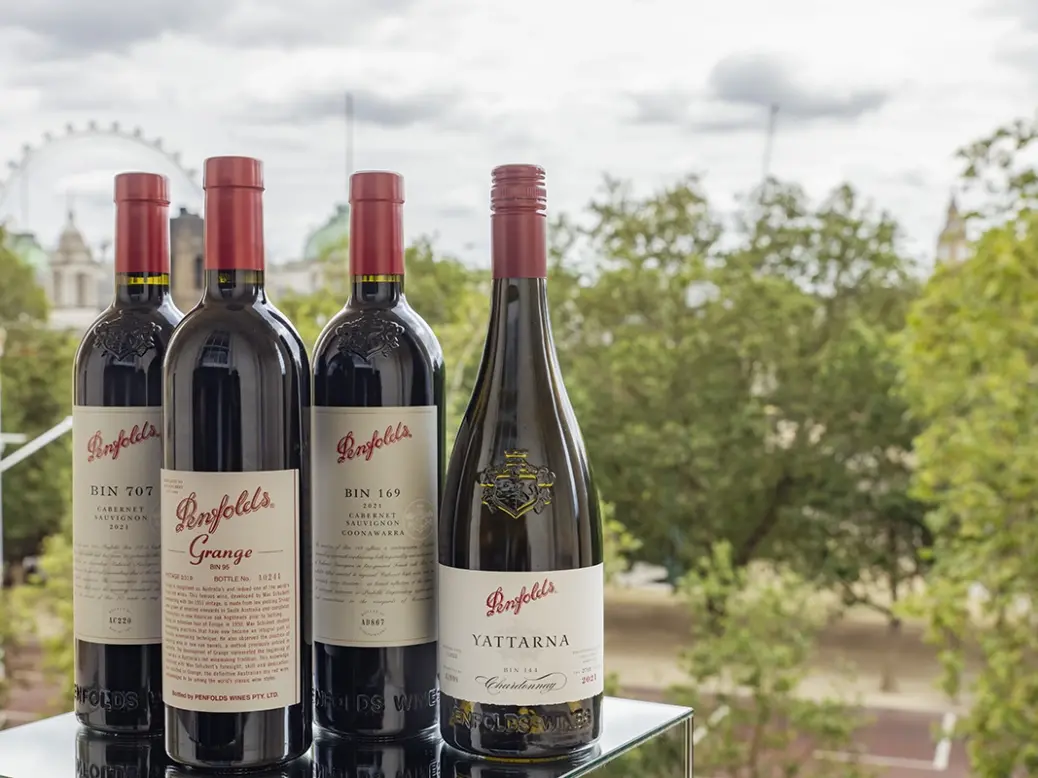
Penfolds is located in South Australia's famous Barossa Valley. It is one of the most recognisable wine giants in Australia, and is regarded as the symbol of Australian wine and the aristocrat of the Australian wine industry. It is regarded as the symbol of Australian wine and is known as the aristocrat of the Australian wine industry. It has a wide range of wines with various combinations of Bin and number, and its famous Grange, BIN No. 95, is one of Australia's top wines, and even enjoys the honour of being the king of Australian wines, and has even been awarded a perfect score of 100 by the wine authority Robert Parker, and it is recognised as one of the most stable wines in the world in terms of quality.
Legendary winemaker Max Shubert played a very important role in the history of Penfolds, serving as Penfolds' Chief Winemaker from 1945 to 1975. But he actually joined Penfolds in 1931 when he was just 16 years old. But he was just a letter carrier for the company and would do anything to join Penfolds and learn to make wine. By 1948, at the age of 33, he was Penfolds' head winemaker. In 1950, he travelled to Europe, mainly to Spain and Portugal, to learn about the techniques and traditions of making Calais in those countries. A side trip to Bordeaux, France, changed his philosophy of winemaking for the rest of his life. During this trip, he visited several of Bordeaux's Medoc wineries, including the Big Five. In Bordeaux at that time, it was emphasised that wines had to have the potential to age, and that they had to be kept in the cellar for a certain period of time in order to become more drinkable. Often the best wines had to be cellared for decades, so that they had a long aging potential. This style stuck in Max's mind, and he decided to create something that could be aged for a long time like this in the future.
Upon his return to Adelaide, South Australia, in 1951, he immediately began a search for grape varieties that could be used to make this wine with ageing potential. At the time, Australian Shiraz was stable in terms of quality, acreage and yield. Therefore, 1951 was the first vintage in which he started to make a wine suitable for cellaring or ageing. This was the first vintage of Grange, now a familiar Penfolds favourite, with Shiriz as the predominant varietal, and a small percentage of Cabernet Sauvignon added to the 1952, which Max thought would give the wine a more layered feel, like a wine that has a lot of character. Max thought that adding a small percentage of Cabernet Sauvignon would make the wine taste more layered, like a Bordeaux winery that uses the blending method to make its wines. In 1957, Max travelled to Sydney to present this new creation to the company's senior management and some good friends in the wine industry. However, because the addition of spirits was still popular in Australia at that time, such as Port, a style with high alcohol concentration and a little bit of sweetness, and because his wines were not aged long enough at that time, most of the people in the tasting at that time gave them not very good reviews. So the Penfolds management gave it a bad reception. Penfolds management ordered Max to stop the Grange project. Only Max himself believed in the value and potential of Grange, so he continued to make it in secret for several more vintages until one day in 1960, when one of the company's directors had a chance to drink it and was so amazed by it that he resumed the Grange project. In 1962, the 1955 vintage of Grange was sent to a major wine competition and won over 50 gold medals. Since then, Grange, the Australian Shiraz, has made a name for itself around the world and has remained the benchmark for Australian wine ever since. In 1995, the 1990 vintage of Grange even beat out many of the best wines in the world to become the number one wine in the Wine Spectator magazine's list of the 100 best wines of all time.
[What does Bin mean?]
Many Penfolds wines are labelled Bin and then have a number added as their name, what does this Bin mean? The smaller the number, the more expensive, or the bigger the number, the more expensive? No. Bin in English means box or barrel, a large container. In Penfolds' case, it was the number of the area in the cellar where the wines were aged, e.g. for a batch of wines aged in this area, they were Bin 2 or Bin 3. The first wine to bear a Bin with a number on it was Kalimna Bin 28.
In the beginning, the numbering of the Bin was not fixed. For example, Grange's Bin number was Bin 1 in 1951, Bin 95 in 1955, and then changed a few more times before finally settling on Bin 95 in 1962, but nowadays most of the Bin numbers on Penfolds wines are fixed. Think of it as the name of the wine.
![]()
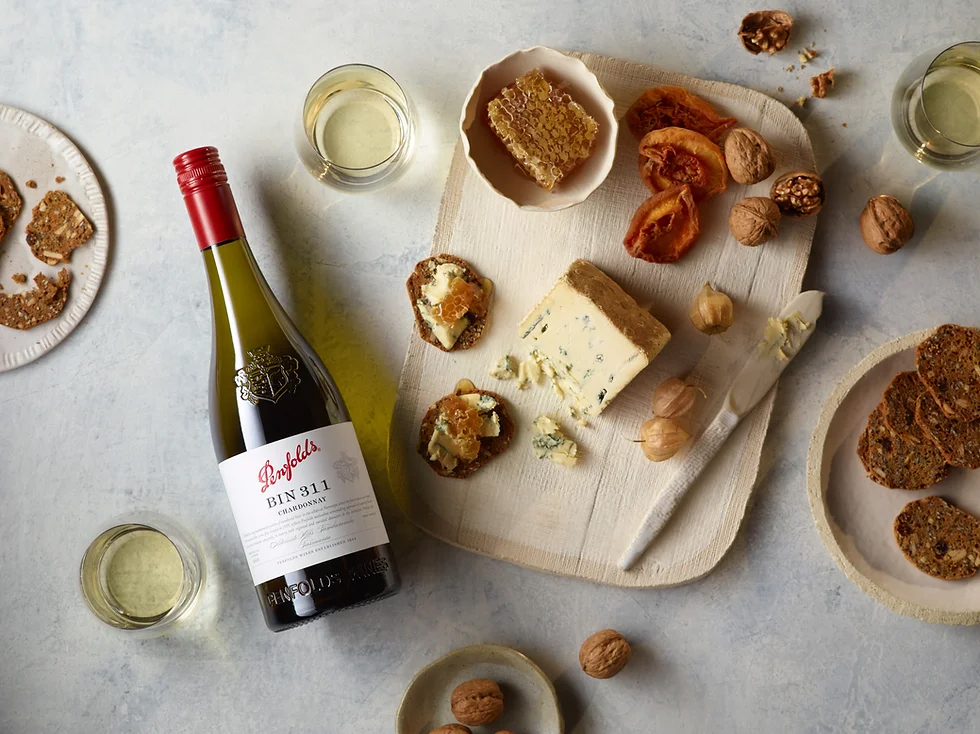
Bin 311 Chardonnay truly reflects the winemakers’ mantra ‘we always go where the fruit grows best and where it best suits style’. In 2017, the fruit sourcing has moved to cool-climate multi-regional; Adelaide Hills, Tasmania, Tumbarumba. In true Bin 311 style, it exhibits lemon/lime aromas and a mineral acid backbone, complemented by barrel fermentation and maturation in French oak.
COLOUR:Light straw.
NOSE:Fresh and inviting – complexed by yeast lees-derived nougat and ground pistachio/almond/roasted chestnut. Scents of deconstructed crème brûlée ‘(flamed top and custardy middle), enhanced by ripe white nectarine and peach fruits. A liberal sprinkle of crushed rock/pebble dust (quartz, limestone?) certainly adds interest.
PALATE:A very lively palate of freshly sliced cucumber and lime citrus flavours hovering over a soft and succulent acid underpinning. A tight phenolic grip induces wonderful length and drive to the finish. A cool climate regional trio – three different chardonnay expressions of texture/acidity/tightness/purity coalesce, propelling combined fruits/flavours. A ‘new Bin 311’ is revealed.
Rating / Tasting Note
James Suckling 95 pts
This moves into refined and very striking style with a wealth of lemons, white peaches and nectarines on offer, as well as nicely curated hazelnut-oak. The smoothly honed palate has deep-set peach flavors and a succulent, cool-mineral and grapefruit finish. The finest Bin 311 to date.
Wine Advocate 92 pts
The 2018 Bin 311 Chardonnay is a multiregional blend sourced from Adelaide Hills (43%), Tumbarumba and Tasmania—it was previously a single-region bottling. Essentially, it's now a blend of barrels that didn't make it into the Reserve Bin label from the Adelaide Hills and barrels from Tumbarumba and Tassie that didn't make the Yattarna grade. Fermented and aged in 30% new French oak (20% second use and 50% older), it reveals hints of vanilla buttercream on the nose, paired with notes of pineapple, orange, pear and melon. It's medium-bodied, plump and creamy across the palate, then crisp and focused on the finish.
Vinous 92 pts
Limpid straw-yellow. Mineral-accented citrus and orchard fruit aromas arecomplemented by pungent floral and tarragon nuances. juicy andconcentrated on the palate, offering chewy Meyer lemon, pear nectar andhoneysuckle flavors that are supported by a spine of smoky minerality.Smoothly blends depth and energy and finishes long and minerally, withfirm grip and lingering pear and floral notes.
$280/Bottle
Free delivery in Hong Kong for orders of 6+ bottles of wine, 3+ bottles of sake/spirits, or orders over $1,200;
Otherwise, $80 delivery fee per order (except remote areas) or free showroom pick-up during office hours.