HISTORY
OUR ORIGINS
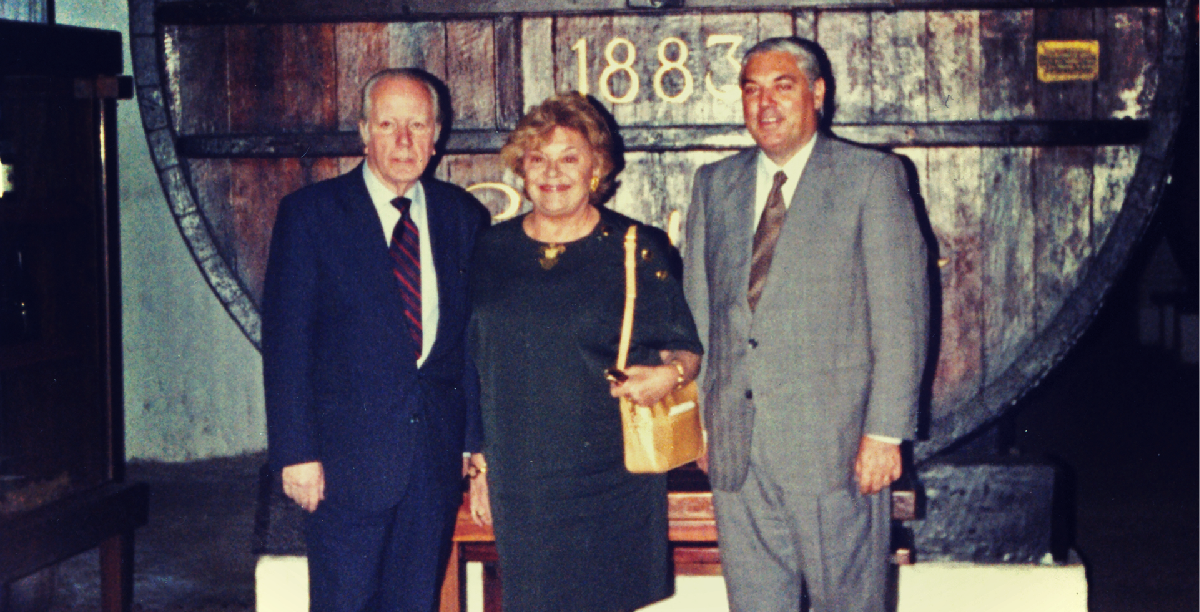
In 1997, Baroness Philippine de Rothschild, Chairman of the Advisory Board of Baron Philippe de Rothschild SA, and Eduardo Guilisasti Tagle, Chairman of Viña Concha y Toro S.A., sealed a partnership agreement with a view to create an exceptional Franco-Chilean wine called Almaviva.
Produced under the joint technical supervision of both partners, the first vintage achieved immediate international success upon its launch in 1998.
THE LABEL
The name Almaviva, though it has an Hispanic sonority, belongs to classical French literature: Count Almaviva is the hero of The Marriage of Figaro, the famous play by Beaumarchais (1732-1799), later turned into an opera by the genius of Mozart.
The label, meanwhile, pays homage to Chile’s ancestral history, with three reproductions of a stylized design, which symbolizes their vision of the earth and the cosmos.
The label bears the name Almaviva in Beaumarchais’ own handwriting. Two great traditions thus join hands to offer the whole world a promise of pleasure and excellence.
CHÂTEAU CONCEPT
The Château concept was introduced in the XIX century in France as a way to honor creative mastery of winegrowers from Bordeaux.
Almaviva was the first wine in Chile created under this French Château concept, taking into account exceptional terroir, one unique bodega and one technical team – the three of which are dedicated exclusively to the production of one wine of unparalleled quality and excellence.
TERROIR
THE VINEYARD
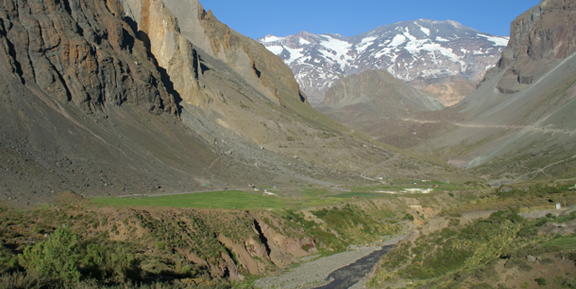
Located in the highest part of Maipo Valley, in Chile’s central zone, Puente Alto was recognized over twenty years ago as offering ideal conditions for growing the Cabernet Sauvignon grape. It is here that 60 hectares have been reserved exclusively for Almaviva.
THE SOIL
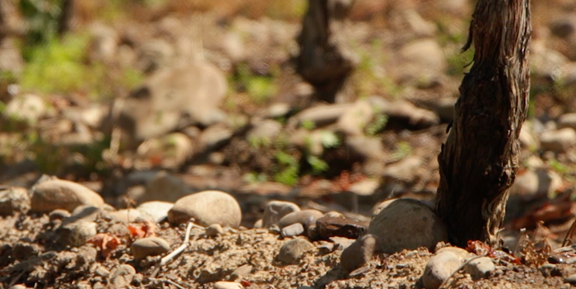
Featured characteristics of Puente Alto include its rocky, poor soils, which consist of loamy clay down to 50 centimeters, sandy loam, gravel, and rocks below. These alluvial soils allow for proper drainage and impart minerality, as well as lower pH levels, resulting in extraordinary quality, balance and elegance.
THE CLIMATE
Almaviva is located in the northern bank of the Maipo River 650 meters above sea level. It’s situated at the foot of the Andes cordillera, in the Maipo River basin. A determining factor in this extraordinary terroir is the cold weather influence of the Andes cordillera, which manifests itself in the form of fresh breezes and an ample temperature oscillation between day and night, particularly during the maturation period. These conditions encourage a long and homogenous development of the grapes, jointly with a more pronounced acidity, a fresh red fruit and a higher concentration of color and aromas in the grape bunches.
The climate of Puente Alto is characterized as semiarid Mediterranean. An average annual rainfall of 300 mm, concentrated principally in the winter months offers an absence of fungal diseases and provides ideal growing conditions for supreme vegetative development. This corresponds to one of the coldest zones in the Maipo Valley, being in the high part of the valley itself.
GRAPE VARIETIES
The Almaviva winery has 60 hectares productive vineyards. The oldest vineyards were planted in 1978 in Puente Alto, a place that has been recognized for more than 30 years for having ideal conditions for producing one of the best Cabernet Sauvignon’s in Chile.
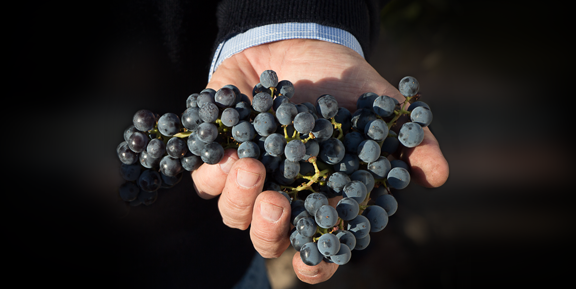
The winery was planted with five distinct varieties, the Cabernet Sauvignon, the Carménère, the Cabernet Franc, the Merlot, and the Petit Verdot, with Cabernet Sauvignon being by far the most cultivated, as it is particularly well adapted to the terroir of Puente Alto.
This arrangement determined the mix of Almaviva, an assemblage of various bordelais wines, with a predominance of Cabernet Sauvignon, harmoniously associated with smaller percentages of Carménère and Cabernet Franc, Merlot and Petit Verdot. The final result is a novel, potent, and unique wine that offers the best of both worlds.
WINEMAKING
THE WINERY
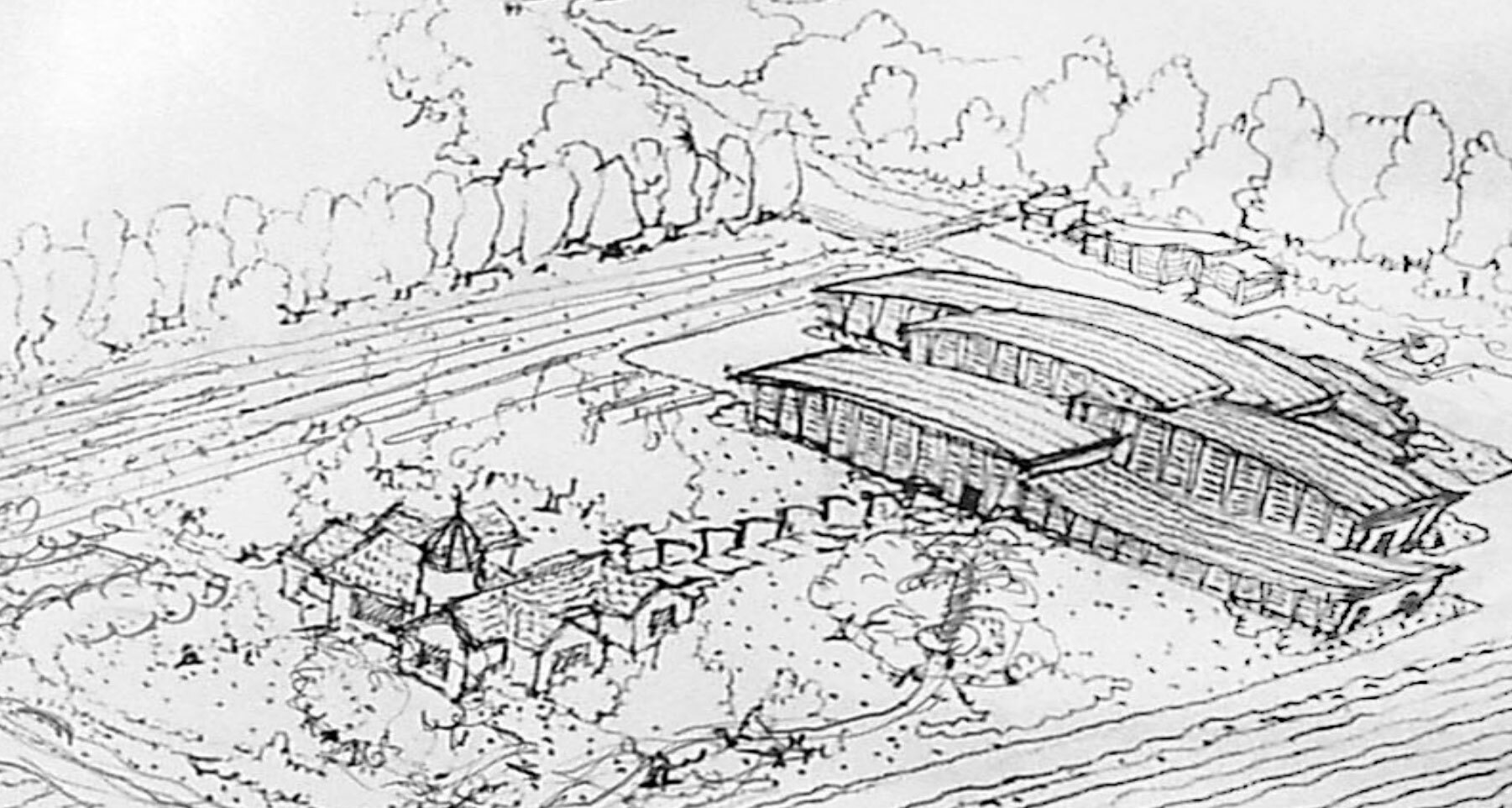
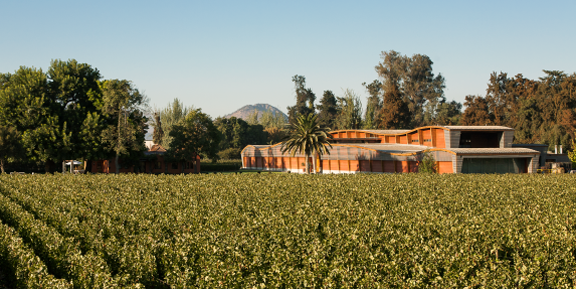
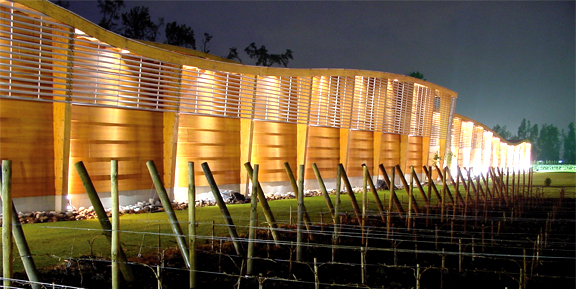
Located in Puente Alto, this bodega was designed by the famous Chilean architect Martín Hurtado. Built in 1998, and inaugurated in the year 2000, Almaviva winery is recognized as a perfect integration of both esthetic design and functionality.
For its construction, native woods were brought from the south of Chile, interlacing the warmth of indigenous materials with contemporary, modern austerity. The undulating curves of the roof simulate the shape of the Andes Mountains, harmonizing with the surrounding natural landscape. The decoration of its interior is inspired by symbols and artifacts representative of the native people of Chile.
HARVEST
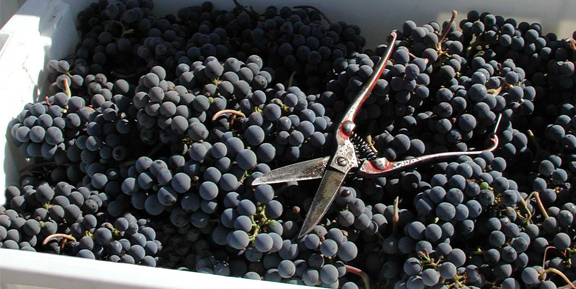
During harvest, shallow recipient bins are used to ensure careful handling of the grapes. The bunches are then lifted to the Mezzanine or second level where they are hand-sorted.
Once de-stemmed and lightly squeezed to release their juice, only gravity is used to move the grapes from the reception area to the vinification tanks located at the first level below.
VINIFICATION
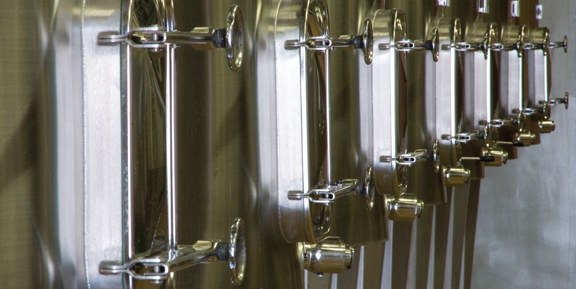
Composed of two rooms with stainless steel tanks adapted to the size of each vineyard parcel, the vinification room is where the maceration and alcoholic fermentation take place.
The must is first cooled and the juice is left in contact with the skins in order to extract their rich color and aromas, then warmed before the alcoholic fermentation and final maceration take place. The Malolactic Fermentation occurs spontaneously, immediately before or just after the wine is drained off by gravity into new French oak barrels.
The skins and seeds are pushed into basket presses and lightly pressed to extract the press wine, which is added in small proportions to the final blend.
GRAND CHAI
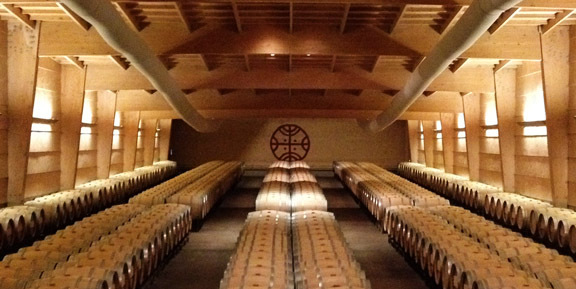
The Grand Chai’s impressive architectural design creates a forced perspective and a sense of depth as the view extends out to the vineyards, the birthplace of the wines aged here.
After the maceration in tanks, the wine is drained off into new French oak barrels. A glass bung is used as a stopper and allows the barrels to be easily topped.
The barrels are kept in the Grand Chai approximately 10 months before being transferred to the Second Year Chai.
After about 6 to 8 more months of aging, the wine is fined with egg white before being drained into stainless steel tanks and bottled.
BOTTLING ROOM
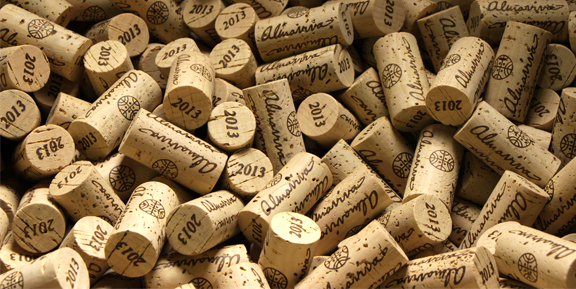
The bottles undergo a strictly controlled rinse before being filled and sealed with natural corks of first selection.
The bottled wine is left to settle before being shipped to the Negociants of Bordeaux, from where it will be distributed throughout the world.
Just prior to dispatching the wine, the bottles are labeled and capped.