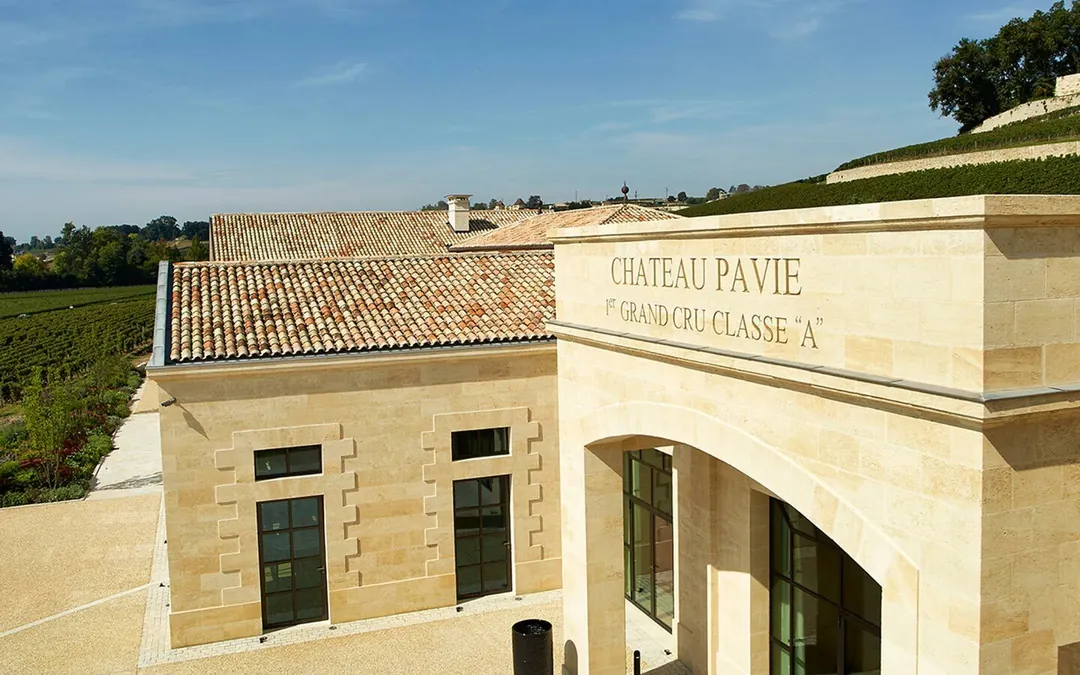
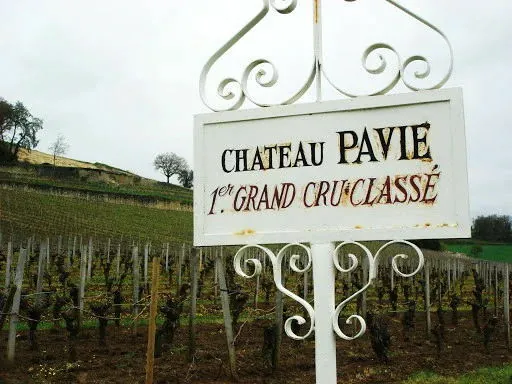
It is said that there is Lafite on the left bank and Pavie on the right bank. Among the wineries that have risen the fastest in terms of reputation, wine prices and scores in Bordeaux in the past 20 years, Chateau Pavie can be said to be the leader among them.
Chateau Pavie has a long history, dating back to the fourth century AD. At that time, the first grape seedlings began to be planted in and around Pavilion. Previously, a peach called "Bafei" with red flesh was cultivated here. It was this peach that eventually gave the winery its name. Later, the "Buffy" peaches were gradually uprooted and grape plants were planted. In 1867, the property, then called "Pimpinelle", belonged to Messrs. Fayard and Chapus.
In 1873, Bordeaux wine merchant Ferdinand Bouffard inherited Domaine de la Sable. He then purchased other surrounding properties in Pigasse, Chap, Falla and Dussaut, which together totaled nearly 50 hectares. Mr. Ferdinand Bouffal not only founded the Pavie vineyard in the earliest sense, he also insisted on making and selling the wines of each of the following properties separately: Pavie-Pizzard (Larcis-Bergey), Pampi Naylor, Clos Simard and la Sable. This energetic and energetic wine merchant passed away in 1912. However, these various wineries continued to operate as best they could, even during World War I. They await the arrival of a new owner. It was not until 1919 that Mr. Albert Porte came here and took over these properties. He sold "Pavie-Decesse" (now Pavie-Decesse, that is, Pavie-Decesse winery) and merged several other properties to create the current Pavie winery. In 1923, the winery built a modern winery. In 1943, Alexandre Valette, a wine merchant from Saint-Ouen, purchased Château Pavie. He was also the owner of Château Troplong Mondot. In 1955, the Chateau Saint-Emilion classification system was established, and Chateau Pavilion won the honor of Premier Grand Cru Classe B. In 1957, Jean-Paul Valette took over Château Pavie.
In 1998, Jean sold Chateau Pavie to the Perse family. Gerard Perse can finally devote all his passion to this land that he has longed for. Gerard Perse, who originally ran a supermarket, became obsessed with wine. He often held wine gatherings with old friends, organized wine tasting parties, and traveled around the Bordeaux production areas all day long to visit various large and small wineries, so he became interested in running a winery. He was especially fond of the Saint Emilion production area on the right bank. Finally, he bought Monbousquet in 1993 and embarked on the road of no return to produce top-notch wines. He officially joined the ranks of the owners, and then waited for the golden opportunity of a lifetime when the Valette family sold Pavie in 1998. , he quickly sold his supermarket shares, put his fortune on Pavie, acquired the entire winery, and concentrated on developing his own boutique wine kingdom. After Gerard Peres took over Pavie, he immediately carried out cost-effective renovations, built an underground drainage system, replaced old and diseased trees, and cut the yield per hectare by half (compared to the previous owner), to an average of only 3,000 liters per hectare per year. He hired Michel Rolland as a winemaking consultant. Since then, the quality of his wine has improved rapidly, and he has been favored by all walks of life (except Jancis Robinson), including Robert Parker, who is very fond of him. In 00, 05, 09, and 10, he gave shocking full scores, and in 2012 In the latest classification list of Saint-Emilion, Pavie has risen from Class B to the top A Class, and is listed as the four kings along with Angelus, Ausone and Cheval blanc. From being unknown in the wine industry to being on his own, he faced a lot of cynicism from so-called insiders. The old-school wine industry people in the local Saint Emilion had rejected him from the beginning. In addition to laughing at his crazy investment, they even questioned Pavie's joining. It’s a New World style, not a traditional French wine, and the wine critics are shouting that they shouldn’t rate this newcomer! Today, Pavie stands at the top. Whether it is market acceptance, wine prices, or scores, they continue to rise every year. Regardless of whether he is a new school, an old school, or a fusion school, Pavie has indeed become a school of his own, and he has gained recognition from the market. affim.
Region
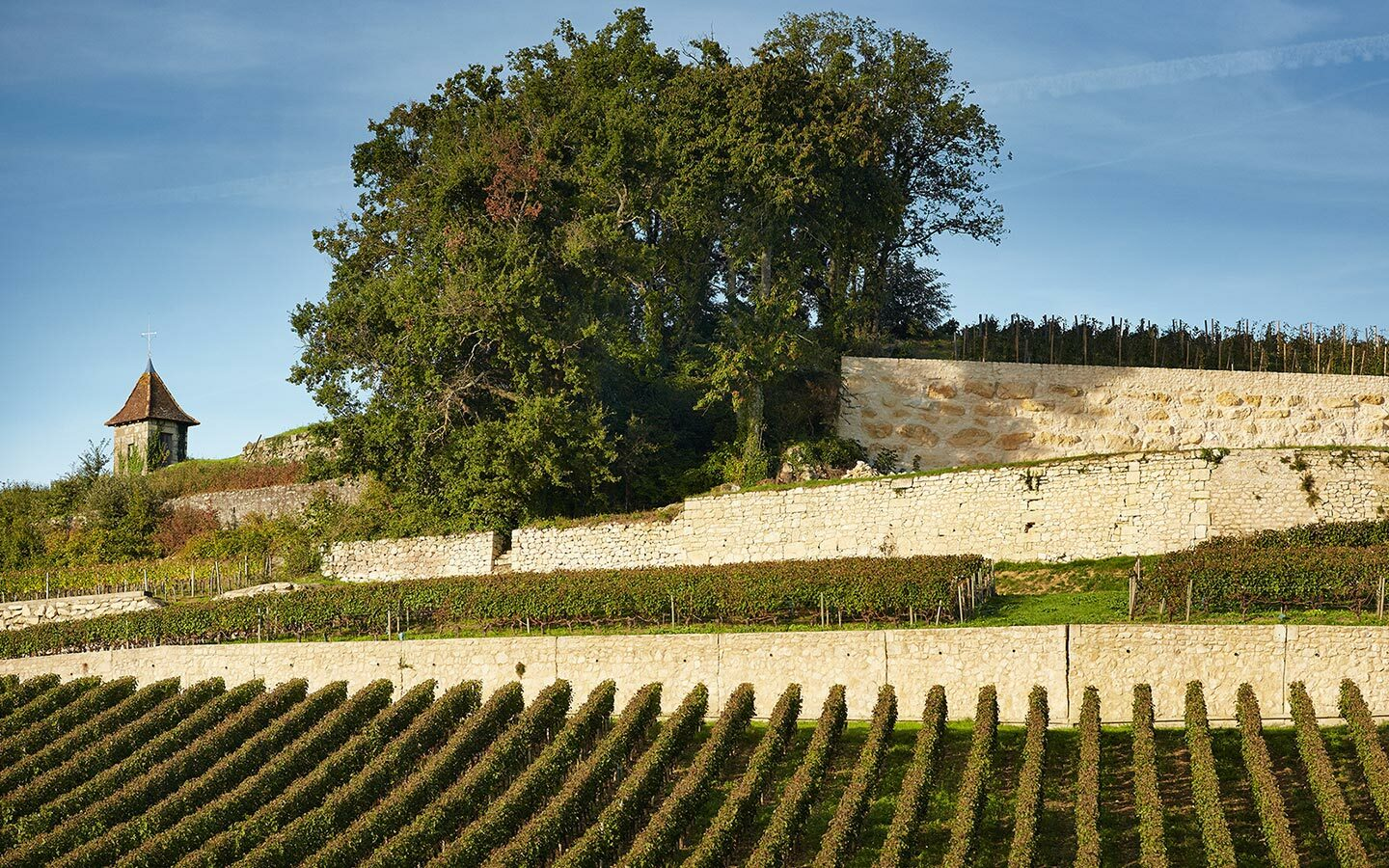
The Pavilion vineyard has naturally poor soil, and the entire slope can enjoy good sunlight and a completely south-facing orientation. The moderate slope angle and topography contribute to excellent and natural drainage function, even in the raging westerly environment. Frost is rarely encountered. The entire vineyard is composed of three distinct soils: limestone highlands, mid-slopes and foothills. The limestone plateau is located 85 meters above the Dordogne River, and the soil composition is white lithium-containing limestone (white limestone is located on starfish limestone); the middle slope is located 55 meters above the Dordogne River, and the soil composition is It is a fine brown limestone located on the calcareous green sandstone of Fronsadais (heavy clay limestone soil); the foot of the mountain is located 35 meters above the Dordogne River, and the soil composition is colluvial brown limestone soil. Above the river sand (clay-calcareous soil at the bottom of the slope), there is dusty brown soil (clay silt).
Under the guidance of winemaking consultant Michel Rolland, Chateau Pavie has its own dedicated working team, and all working teams work in the vineyards all year round. The winery attaches great importance to green harvesting. Green harvesting is all done manually. This working technique is based on the premise of "sacrifice part of the grape yield". Chateau Pavilion prunes some grapes on the grape plant to ensure that the remaining grapes have more potential to produce better-flavored wine. This technology allows the remaining grapes to have more space, nutrients, air, light and other conditions. The grapes can grow in a more balanced and homogeneous manner, reaching ideal maturity and health. The wine produced from such grapes will have a better flavor. It will also be richer and more delicious.
Pavie's vineyards are cultivated with 60% Merlot, 25% Cabernet Franc and 15% Cabernet Sauvignon.
Merlot fields are mainly located in limestone highlands (clay limestone in the upper layer and starfish limestone in the lower layer). This combination is ideal because the Merlot variety grows very well in mud-lime soil. In fact, the dense starfish limestone plays a very important role in the water supply function of the grape plants. In hot and dry summers, there will be no shortage of water supply, even if it is several meters deep underground. When the flowering season and grape harvest season come, 35% to 70% of the water supply for the grape plants is provided by the deep, thick, dense and evenly distributed calcareous bedrock. On the contrary, even in the abundant rainy season, due to the good permeability of the limestone soil, water will not be retained too much, and the final amount of water given to the grape plants is ideal and suitable for their growth. Limestone soil is both permeable and water-locking for Merlot. Merlot itself is an early-ripening grape variety. It is precisely because of this that Merlot can adapt well to this cold and moist clayey limestone soil, so as to better give the wine a rich color, round structure and elegant flavor. Tannins.
Cabernet Franc fields are mainly located on light clayey calcareous soils and sandy soils on the mid-slope and lower slopes. The upper clay layer is covered with starfish limestone soil, which provides a natural and excellent drainage system. Like Merlot, Cabernet Franc performs well in both clay-calcareous soils and sandy limestone soils. Cabernet Franc matures early and to a good degree here. Well-ripened Cabernet Franc produces rich, firm, elegant wines with a long finish.
Cabernet Sauvignon brings structure to Château Pavilion’s wines. Cabernet Sauvignon grows well in clay soils. The clay soil of Chateau Pavie is mostly located at the foot of the slope. Cabernet Sauvignon is a late-ripening grape variety, so it is not susceptible to fungal diseases caused by fog and moisture. Only Cabernet Sauvignon grapes grown in sandy and clayey soil can reach the ideal maturity and obtain an appropriate amount of moisture at the same time. Because this type of soil is a thermally dry soil and has low water content, it is Helps the growth of Cabernet Sauvignon.
Winemaking
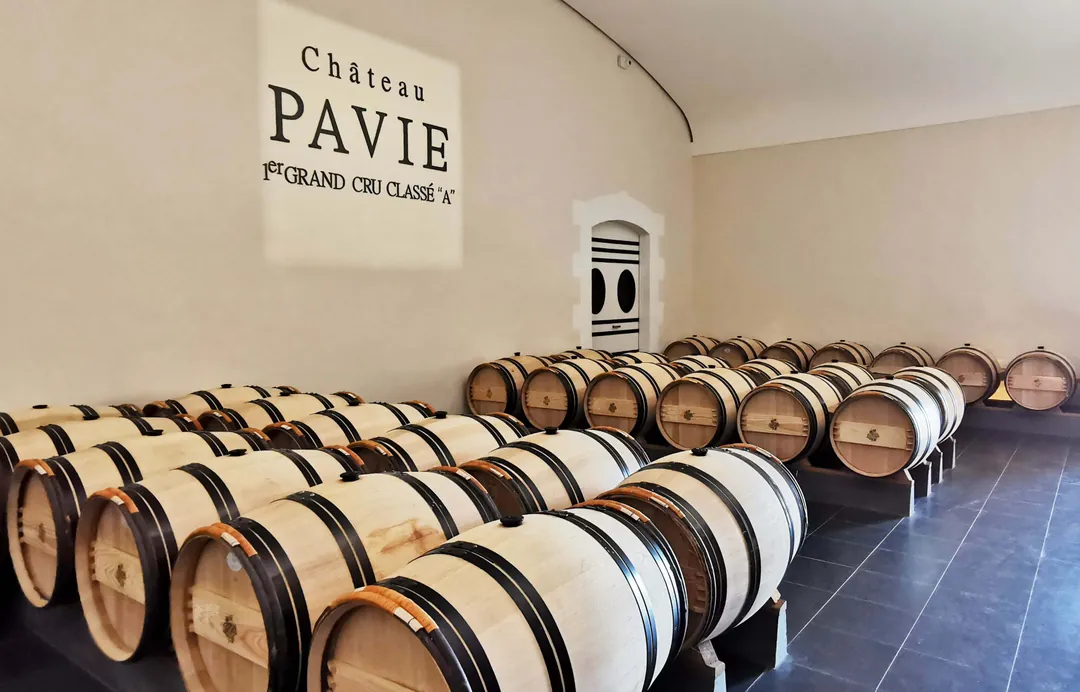
The masonry wine cellar used to store oak barrels in the winery was all designed in 1998, emphasizing both practicality and beauty. The walls are supported by the arcades of the former Orleans train station in the Bastide district of Bordeaux, making the entire wine cellar look simple, solemn and very elegant. These masonry arcades have witnessed the popularity and rapid development of trains over the past two centuries, and now patiently await the brewing of the wine at Château Pavilion. These two completely different concepts of time remind us that patience can make a good wine. The wine cellar of Chateau Pavilion allows time to stand still. Over the years, the perfect wine is finally born from the oak barrels.
James Suckling 93 pts
A juicy wine with hints of nuts, berries, salted chocolate and gunpowder. Medium- to full-bodied. From a particular parcel that gives tannin length. Turns a little tight at the end. 50% merlot and 50% cabernet franc.
Jeb Dunnuck 93 pts
Cherries and blackcurrants, quite strong aromatically. Liquorice, slate, blueberries, vanilla and floral scents. Nicely juicy and plump, lots of energy here with focus and precision. I like the fun side of things, this has a confidence about it, full of flavour and texture – a chalky and stony grip, but with well integrated wood. The Cabernet Franc is giving lots of great floral scents and some spicy back bone to the wine. Lots of freshness but there‘s underlying power here too. Quite a serious wine, it’s not light at all, very accomplished. A true introduction to the grand vin here. Suggest waiting a few years but actually it‘s got a lot to offer right now. Ends stony and mineral.
Vinous 92 pts
The 2021 Arômes de Pavie is just as inviting as it was en primeur. Bold and punchy, with fine balance, the Arômes is a terrific representation of the property. Sweet floral and spice notes meld into a core of red fruit, orange peel and mocha. All the elements are so well balanced. Best of all, the 2021 will drink well on release. It’s a very serious Arômes.
$590/支