{{ 'fb_in_app_browser_popup.desc' | translate }} {{ 'fb_in_app_browser_popup.copy_link' | translate }}

{{ 'in_app_browser_popup.desc' | translate }}

🚚Free delivery upon 6 bottles|Terroir Collection - 3 bottles free delivery

🍷酒款、優惠經常更新,請時刻追蹤我地😊|🤵👰Wine Couple 你的最佳婚宴酒酒商

Lynch Bages

1855 Fifth Growth Grand Cru Classes

Lynch Bages, 靚次伯, Pauillac, 列級莊五級莊, Cazes家族, 小靚次伯, Echo de Lynch-Bages, Blanc de Lynch-Bages, 靚次伯白葡萄酒, 1855 Grand Cru Classe

名氣五級莊Lynch Bages 靚次伯

Lynch Bages, 靚次伯, Pauillac, 列級莊五級莊, Cazes家族, 小靚次伯, Echo de Lynch-Bages, Blanc de Lynch-Bages, 靚次伯白葡萄酒, 神之水滴

Although there are records of the Bages territory as far back as the 16th century, the history of wine production in the area really began in the 18th century. From 1749 to 1824, the vineyard was owned by Thomas Lynch, the son of an Irishman from Galway who worked as a merchant in Bordeaux. Thomas Lynch managed the land wisely and produced high quality wines under the name of ''Cru de Lynch''. As part of the prestigious 1855 Classification, for the Exposition Universelle de Paris, his wine would soon be classified as one of the fifth growths.

''Lou Janou'', the Montagnol
Later on, Jean ''Lou Janou'' Cazes, a ''Montagnol'' (a term used to describe farmers from the austere upper valleys of Ariège), came to the Médoc to earn a living. In the 1930's, General Félix de Vial, a descendant of the Cayrou family, leased the vineyard to Jean-Charles Cazes, the son of ''Lou Janou'' and a farmer at Château Ormes de Pez in Saint-Estèphe. Cazes went on to purchase both properties in the wake of World War II. Lynch-Bages has been run by the Cazes family ever since.

The old vat-house and its testimony to the past
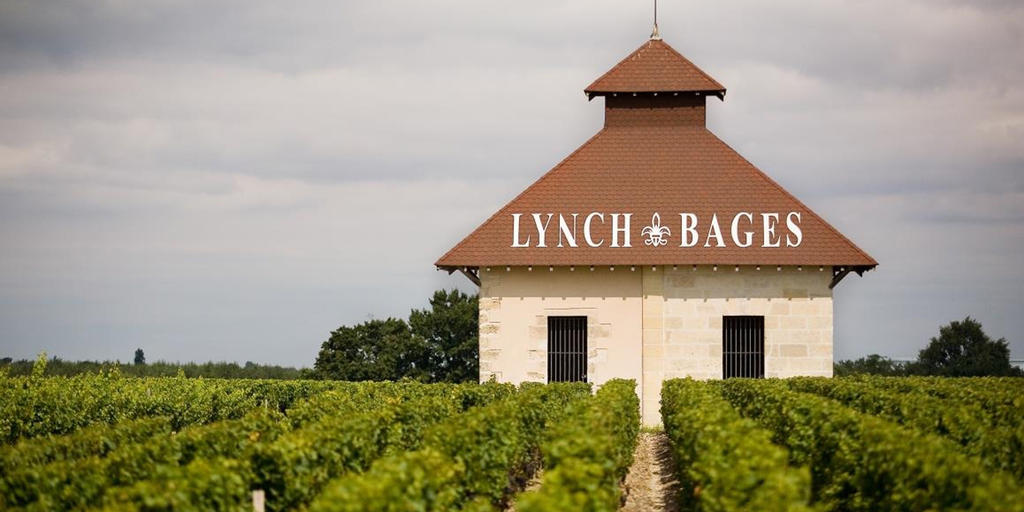
Lynch-Bages' old vat-house represents a rare example of traditional winemaking equipment the Médoc area. Its slatted flooring which introduced the advantages of gravitational design now used in modern vat-houses, was invented by Skawinski in 1850.

The extraordinary hard work of the winemakers
Back then, grapes were transported in a cart pulled by horses and then being lifted by crane and emptied into a wooden tank on wheels and tracks. One or two winemakers inside the tank then crushed the grapes, making the juice flow out through openings into vats on either side. A rope-pulley-bucket system and no less than six workers were then required to remove the leftover grape skins from the fermentation vat.

Lynch Bages, 靚次伯, Pauillac, 列級莊五級莊, Cazes家族, 小靚次伯, Echo de Lynch-Bages, Blanc de Lynch-Bages, 靚次伯白葡萄酒, Jean-Michel Cazes
Lynch Bages, 靚次伯, Pauillac, 列級莊五級莊, Cazes家族, 小靚次伯, Echo de Lynch-Bages, Blanc de Lynch-Bages, 靚次伯白葡萄酒, Jean-Charles Cazes

In techno veritas
Under the responsibility of Nicolas Labenne, a team of 35 people are involved in the daily monitoring of the Lynch-Bages vineyards. The structuring of the vineyards has undergone remarkable improvements since 2006 with the use of satellite technology combined with surveys on soil quality. This improved attention ensures the preservation of Lynch-Bages' genetic winemaking heritage and has allowed us to establish a precise mapping and re-structuring of vine parcels in order to preserve, enhance and develop the specific nature of each terroir.

Human hands and technical progress
With support from cutting-edge technology for real-time supervision and analysis, human hands orchestrate harvests and vinification according to grape varieties, ripeness levels and terroir. The aim is to construct individual personalities for each parcel. Once the alcoholic fermentation is complete, the wines are drawn from the vats using the phenolic potential of each vat.

Blending
Following the processes of maceration, drawing off, pressing and malolactic fermentation, blending then takes place in December. The complex composition of this fine wine varies from one year to the next depending on the parcels' behaviour in relation to the climatic conditions of the vintage. A panel of experts chaired by Jean-Charles Cazes and the Lynch-Bages technical team (Daniel Llose, Nicolas Labenne and Jérôme Le Roux) then develop and define the blend with outstanding cellaring potential that makes this fine Lynch-Bages wine.

Barrelling and the ageing process
The first and second wines from Lynch-Bages are drawn off into split stave-wood oak barrels with optimum aromatic capacity, made by reputed barrel-makers, before being aged in our cellars. Before being enjoyed, they are required to rest for a period of time in order to soften out and fully integrate the aromas imparted from the oak. The winemaker's skilled craft involves regular racking and fining for harmonisation before the wines are bottled at the château and aged.

Integrated cultural winemaking practices
Lynch-Bages has implemented a series of measures that aim to reduce the impact of winemaking on the environment. These include cover crops, soil maintenance, environmental selection of products, the use of sexual confusion capsules (to protect against the Cochylys and Eudemis vine moths), mass selection of Petit Verdot and the use of wastewater treatment process.

Lynch Bages 靚次伯富有結構感,顏色深邃,單寧架構結實,十分細膩且優雅,年輕時便散發出馥鬱的香氣,隨著陳年還會變得更為深邃複雜。酒莊在波爾多擁有非常高的評價,深受酒評家和葡萄酒愛好者的追捧。除了正牌酒外,酒莊還生產副牌酒 Echo de Lynch-Bages 小靚次伯以及靚次伯莊園 Blanc de Lynch-Bages 白葡萄酒

我地Wine Couple 尚有以下靚次伯酒款發售

睇睇我地Wine Couple 更多列級莊酒款

Medoc Grand Cru Classe en 1855