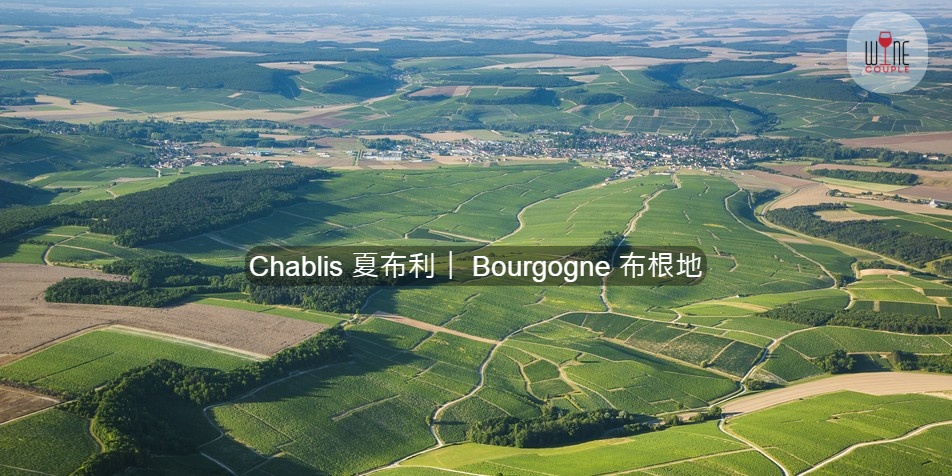
The Chablis wine region is in France, in the northern part of the Bourgogne region in the Yonne department between Paris and Beaune, a short hop from the Champagne region.
The name Chablis is thought to come from two Celtic words: "cab" meaning "house" and "leya", meaning "near the wood". There was a Neolithic village in the Serein valley, and then, much later, there was a fortified farm from the time of the Gauls, which no doubt already had some vines.
The village of Chablis goes back to the Roman period, with the construction of four major villas. The vines were pulled up under the Emperor Domitian (81-96), but were replanted under Emperor Probus (276-282). That was 18 centuries ago.
In the 9th century, Charles the Bald had a small church built at the mouth of the valley of Vaucharmes, dedicated to Saint Marie, to thank God for his victory at the battle of Fontenoy.
In 867, fleeing the Vikings who were sailing up the Loire, the Benedictine monks from Tours took refuge on the banks of the Yonne in the Saint Germain abbey in Auxerre, around 20 kilometers from Chablis. But they still feared the arrival of the Vikings up the Yonne, so Charles the Bald gave them the village of Chablis. They soon received donations and inheritances, notably in the form of vineyards, to assure the holy office, to meet their needs in wines, and to be able to receive the poor and their guests.
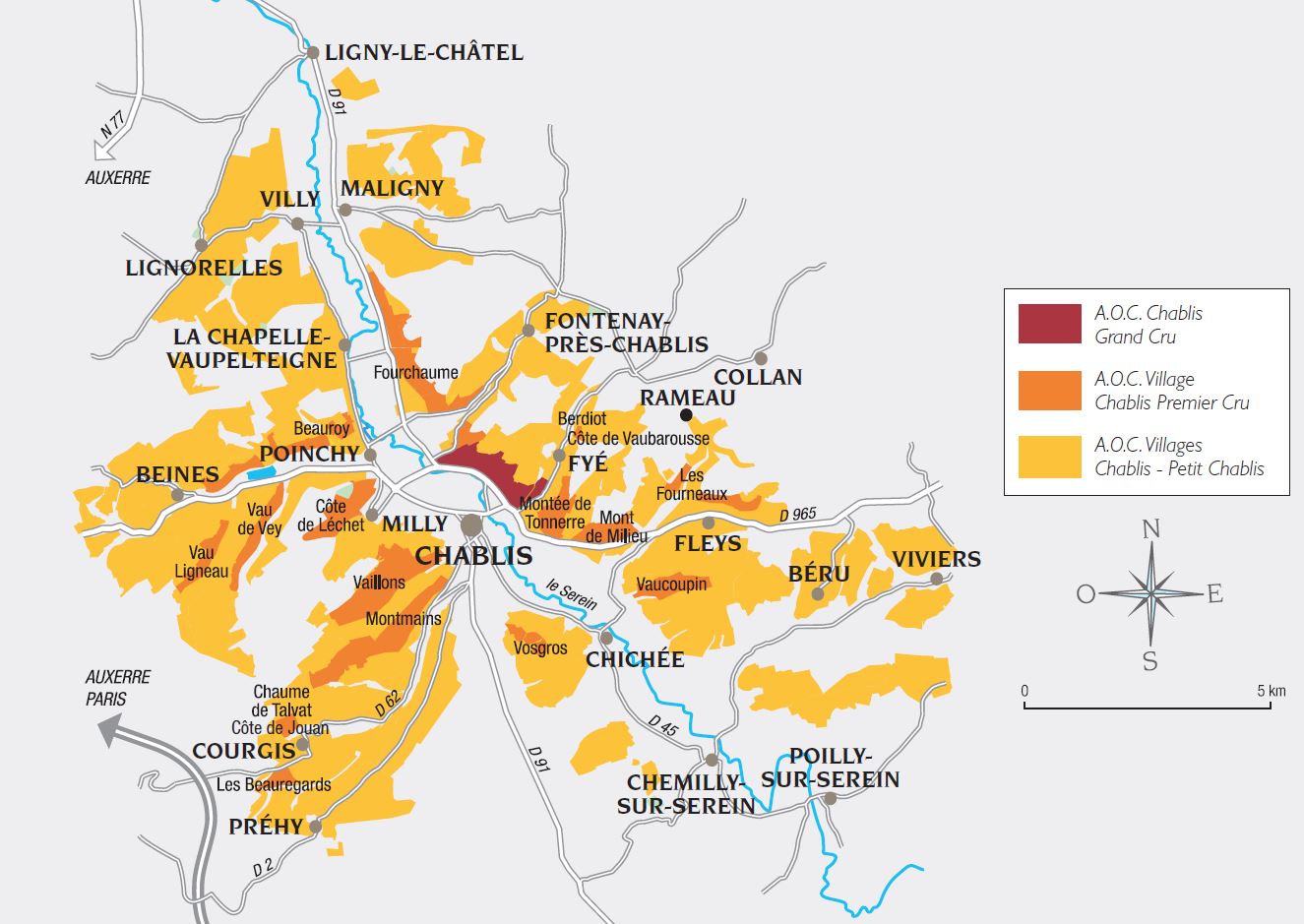
Today, the area planted in Chablis is just over 5,500ha. In 1955, after the phylloxera crisis in the 19th century which ravaged France's vineyards, then two world wars, Chablis covered no more than 550ha of vine. Nonetheless, not all the appellation's territory is planted as yet: the delimited zone comprises 6,800ha spreading along the valley of the Serein, the river which runs through the wine region from south to north before flowing into the Yonne.
The volumes produced have changed in accordance with the increase in area cultivated, with minor variations due to climatic vagaries. In 2017, the harvest amounted to slightly over 238,334hl, the equivalent of 31,7 million bottles (average 5 years : 2013-2017).
Bourgogne white wines of outstanding quality, the wines of Chablis are made from one single varietal: Chardonnay. They are sub-divided into four appellations:
Petit Chablis
Chablis
Chablis Premier Cru
Chablis Grand Cru
These are identified by precisely delimited production zones, and are subject to strict production regulations. Logically, the higher up the hierarchy, the tighter these regulations.
As for Chablis, the main bedrock dates from the Jurassic, or more precisely the Kimmeridgean era (150 million years ago). One particularity concerning Chablis Premier Cru is that the Climats are spread between the right and left banks of the River Serein, a tributary of the Yonne which flows through the region from south to north.
Chablis wines are dry white wines which are characterized by their purity, crispness, sophistication and minerality. The Chardonnay varietal gives results in Chablis unlike anywhere else. It draws its personality and character from a subsoil that is 150 million years old, and ripens in ideal conditions, in a semi-continental climate, which allow it to attain a good balance between sugar levels and acidity.
Chablis Premier Cru
Beauroy, Côte de Savant, Troesmes; Berdiot; Chaume de Talvat; Côte de Jouan; Côte de Léchet; Côte de Vaubarousse; Fourchaume, Côte de Fontenay, L’Homme Mort, Vaulorent, Vaupulent; Les Beauregards, Côte de Cuissy; Les Fourneaux, Côte des Prés-Girots, Morein; Mont de Milieu ; Montée de Tonnerre, Chapelot, Côte de Bréchain, Pied d’Aloup; Montmains, Butteaux, Forêts; Vaillons, Beugnons, Chatains, Les Épinottes, Les Lys, Mélinots, Roncières, Sécher; Vau de Vey, Vaux Ragons; Vau Ligneau; Vaucoupin; Vosgros, Vaugiraut.
Chablis Grand Cru
from Bougros in the NorthWest, through Preuses, Vaudésir, Grenouilles, Valmur and Les Clos to Blanchot in
the South-East.
www.bourgogne-wines.com