{{ 'fb_in_app_browser_popup.desc' | translate }} {{ 'fb_in_app_browser_popup.copy_link' | translate }}

{{ 'in_app_browser_popup.desc' | translate }}

🚚Free delivery upon 6 bottles|Terroir Collection - 3 bottles free delivery

🍷酒款、優惠經常更新,請時刻追蹤我地😊|🤵👰Wine Couple 你的最佳婚宴酒酒商

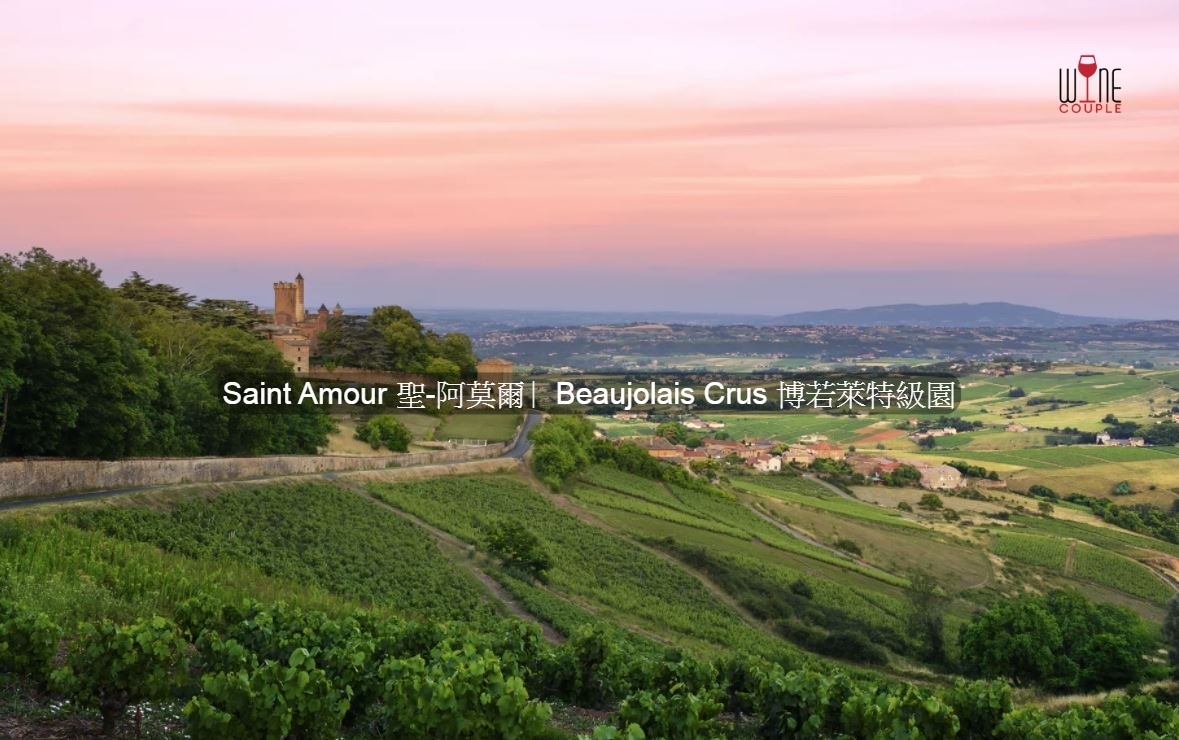
Saint Amour

Most Romantic in the Cru, stone fruit such as peach, medium body

Saint Amour

Everything exudes romance here. Starting with the name of the village, Saint-Amour, which comes from a man called Amor. He was a Roman legionnaire. His statue is next to the church. Weddings are held in the nearby town hall all year round.


The restaurants here have names like Au 14 février and Auberge du Paradis. Romance is well and truly on the menu here!


The most northerly cru, Saint-Amour lies directly south of the Mâconnais AOPs Pouilly-Fuissé and St- Veran (which actually overlaps it). While not as old as several of its more historic cousins, it is nevertheless an appellation of long-standing, established after WWII, in 1946. It currently spans some 320ha of hilly, geologically-diverse terrain, making it the second-smallest cru by area, after Chénas. Just over a hundred growers (115) farm here, producing an average of 1.6 million bottles a year.


In terms of topography and geology, two features are of note. First, most of Saint-Amour’s vineyards lie on east-facing slopes, making for wines of a more moderated intensity than the more powerful crus immediately to the south. Second, the geological terrain is remarkably diverse for the region, spanning an interwoven patchwork of schist, granite, limestone and even alluvium. This diversity provides a range of possibilities for growers and winemakers, and as a result, wines from Saint-Amour run the gamut from fresh, fruity vins de soif to more minerally-intense vins de garde that benefit from a few years’ cellaring.


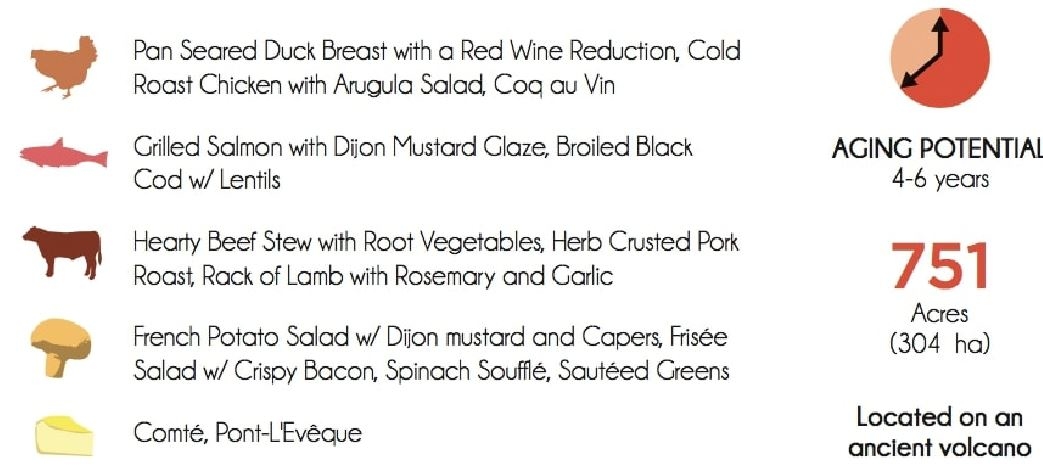
Saint-Amour can be thought of as a mid-weight wine, a soft, fruity and floral wine, it has aromas of red fruit, peony, peach, kirsch, spice and mignonette. Two different types of wine are produced here. A shorter maceration period produces light, aromatic wines for drinking shortly after the harvest. A longer maceration period produces more structured, tannic wines that can be kept for 4 to 5 years.


Saint-Amour is of course the wine for St. Valentine’s. Nearly a quarter of the production is drunk on 14 February. But try it too with autumn dishes like risotto or pumpkin purée. You’ll appreciate its gentle, harmonious features.


Ref.

http://www.clubcrusbeaujolais.com/crus.html

https://beaujolais.com/en/article/video-aoc-saint-amour

https://www.discoverbeaujolais.com/discover-the-wines/fine-and-flavored/saint-amour/