AOC Margaux
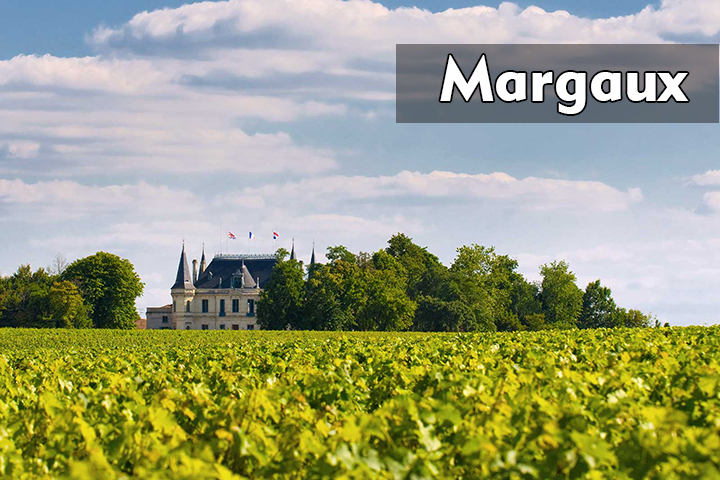
A red wine appellation in the Haut-Médoc sub-region of Bordeaux, Margaux is home to a greater number of Cru Classé estates than any other AOC on the left bank. It is also notable as the Médoc’s largest appellation with 1300 hectares under vine, and is known for producing refined, fragrant wines with intense colour and elegant tannins.
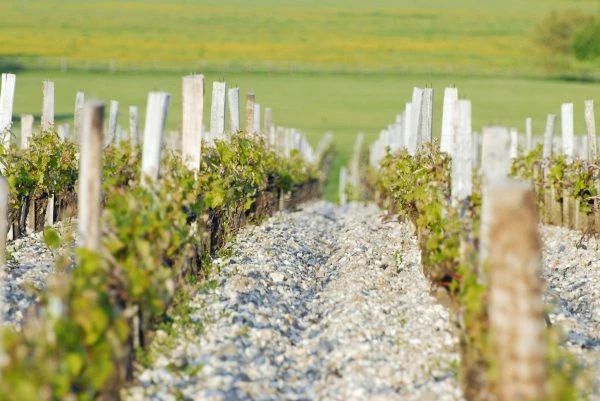
The temperate maritime climate of the region affords Margaux plenty of sunshine hours in the growing season, cooler night-time temperatures and unpredictable localised rainfall which can be heavy at times. To the east of the appellation, the Landes forest protects much of Margaux’s viticultural land from the cool Atlantic breeze, whilst the close proximity of the Gironde helps to moderate temperatures and reduce frost risk in the winter months. Given these conditions, the grapes here tend to ripen a little earlier than those in other left bank AOCs and certainly before the fruits of the cooler north bank appellations. Loose soils of gravel on a bed of limestone, often with larger stones and pebbles, force the vines to dig deep for nutrients and thus, the diversity of the deeper soils - the subtle nuances unseen at the surface - are reflected in the wines of the various châteaux.
The red Bordeaux blend of Margaux is permitted to contain any proportion of Cabernet Sauvignon, Merlot, Cabernet Franc, Malbec, Petit Verdot and Carménère, although most Margaux wines are dominated by the Cabernet Sauvignon grape, which performs well in the appellation’s quick-draining, gravel-rich soils. It is most frequently blended with Merlot for its softness and complexity, and with smaller amounts of the supporting varieties to enhance particular characteristics in the finished wine. The Grand Vins of Margaux are, by comparison with the powerful blends of Pauillac, light and delicate, with a complex aromatic profile and alluring appeal. The best vintages from the top châteaux will continue to improve in the bottle for thirty years or more.
Margaux Famous Producers
1855 Classification
Premiers Crus, 1855
Chateau Margaux
Deuxiemes Crus, 1855
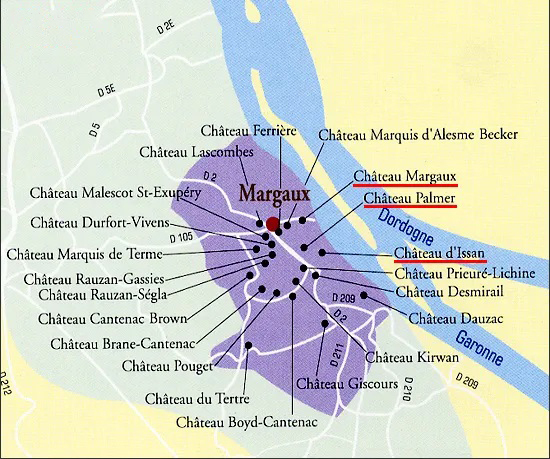
Chateau Brane-Cantenac、Chateau Durfort-Vivens、Chateau Lascombes、Chateau Rauzan-Segla、Chateau Rauzan-Gassies
Troisiemes Crus, 1855
Chateau Boyd-Cantenac、Chateau Cantenac-Brown、Chateau Desmirail、Chateau Ferriere、Chateau Giscours、Chateau d’Issan、Chateau Kirwan、Chateau Malescot St-Exupery、Chateau Marquis d'Alesme Becker、Chateau Palmer
Quatriemes Crus, 1855
Chateau Marquis-de-Terme、Chateau Pouget、Chateau Prieure-Lichine
Cinquiemes Crus, 1855
Chateau Dauzac、Chateau du Tertre
Classement 2020 Crus Bourgeois
Cru Bourgeois Exceptionnel
Chateau d'Arsac、Chateau Paveil de Luze
Cru Bourgeois Supérieur
Chateau Deyrem Valentin、Chateau Mongravey、Chateau la Tour de Mons
Standard Cru Bourgeois
Chateau Bellevue De Tayac、Chateau La Fortune、Chateau Pontac Lynch